Early History
I like to date the history of computer graphics from the Whirlwind Project and the SAGE computer system, which were designed to support military preparedness. The Whirlwind Project started as an effort to build a flight simulator and SAGE was to provide a air defense system in the United States to guard against the threat of a nuclear attack. The SAGE workstation had a vector display and light pens that operators would use pinpoint planes flying over regions of the United States. You can see a SAGE workstation at the Boston Computer Museum. The display is a large radar screen with a wireframe outline of the region being scanned. The light pens are like old large metal drills. A SAGE computer is on display on the corner of ``Hollywood and Vine'' at IBM in Kingston New York.
Software and Algorithms
Jack Bresenham taught us how to draw lines on a raster device. He later extended this to circles. Anti-aliased lines and curve drawing is a major topic in computer graphics. Larry Roberts pointed out the usefulness of homogeneous coordinates,  matrices and hidden line detection algorithms. Steve Coons introduced parametric surfaces and developed early computer aided geometric design concepts. The earlier work of Pierre Bézier on parametric curves and surfaces also became public. Author Appel at IBM developed hidden surface and shadow algorithms that were pre-cursors to ray tracing. The fast Fourier transform was discovered by Cooley and Tukey. This algorithm allow us to better understand signals and is fundamental for developing antialiasing techniques. It is also a precursor to wavelets.
The Early '70's
The state of the art in computing was an IBM 360 computer with about 64 KB of memory, a Tektronix 4014 storage tube, or a vector display with a light pen (but these were very expensive).
Software and Algorithms
Rendering (shading) were discovered by Gouraud and Phong at the University of Utah. Phong also introduced a reflection model that included specular highlights. Keyframe based animation for 3-D graphics was demonstrated. Xerox PARC developed a ``paint'' program. Ed Catmull introduced parametric patch rendering, thez-buffer algorithm, and texture mapping. BASIC, C, and Unix were developed at Dartmouth and Bell Labs.
Hardware and Technology
An Evans & Sutherland Picture System was the high-end graphics computer. It was a vector display with hardware support for clipping and perspective. Xerox PARC introduced the Altos personal computer, and an 8 bit computer was invented at Intel.
The Early '80's
Software and Algorithms
Hardware and Technology
The IBM PC was marketed in 1981 The Apple MacIntosh started production in 1984, and microprocessors began to take off, with the Intel x86 chipset, but these were still toys. Computers with a mouse, bitmapped (raster) display, and Ethernet became the standard in academic and science and engineering settings.
The Middle to Late '80's
Software and Algorithms
Jim Blinn introduces blobby models and texture mapping concepts. Binary space partitioning (BSP) trees were introduced as a data structure, but not many realized how useful they would become. Loren Carpenter starting exploring fractals in computer graphics. Postscript was developed by John Warnock and Adobe was formed. Steve Cook introduced stochastic sampling to ray tracing. Paul Heckbert taught us to ray trace Jello©(this is a joke;) Character animation became the goal for animators. Radiosity was introduced by the Greenberg and folks at Cornell. Photoshop was marketed by Adobe. Video arcade games took off, many people/organizations started publishing on the desktop. Unix and X windows were the platforms of choice with programming in C and C++, but MS-DOS was starting to rise.
Hardware and Technology
Sun workstations, with the Motorola 680x0 chipset became popular as advanced workstation a in the mid 80's. The Video Graphics Array (VGA) card was invented at IBM. Silicon Graphics (SGI) workstations that supported real-time raster line drawing and later polygons became the computer graphicists desired. The data glove, a precursor to virtual reality, was invented at NASA. VLSI for special purpose graphics processors and parallel processing became hot research areas.
The Early '90's
The computer to have now was an SGI workstation with at least 16 MB of memory, at 24-bit raster display with hardware support for Gouraud shading and z-buffering for hidden surface removal. Laser printers and single frame video recorders were standard. Unix, X and Silicon Graphics GL were the operating systems, window system and application programming interface (API) that graphicist used. Shaded raster graphics were starting to be introduced in motion pictures. PCs started to get decent, but still they could not support 3-D graphics, so most programmer's wrote software for scan conversion (rasterization) used the painter's algorithm for hidden surface removal, and developed ``tricks'' for real-time animation.
Software and Algorithms
Mosaic, the first graphical Internet browser was written by xxx at the University of Illinois, National Center for Scientific Applications (NCSA). MPEG standards for compressed video began to be promulgated. Dynamical systems (physically based modeling) that allowed animation with collisions, gravity, friction, and cause and effects were introduced. In 1992 OpenGL became the standard for graphics APIs In 1993, the World Wide Web took off. Surface subdivision algorithms were rediscovered. Wavelets begin to be used in computer graphics.
Hardware and Technology
Hand-held computers were invented at Hewlett-Packard about 1991. Zip drives were invented at Iomega. The Intel 486 chipset allowed PC to get reasonable floating point performance. In 1994, Silicon Graphics produced the Reality Engine: It had hardware for real-time texture mapping. The Ninetendo 64 game console hit the market providing Reality Engine-like graphics for the masses of games players. Scanners were introduced.
The Middle to Late '90's
The PC market erupts and supercomputers begin to wane. Microsoft grows, Apple collapses, but begins to come back, SGI collapses, and lots of new startups enter the graphics field.
Software and Algorithms
Image based rendering became the area for research in photo-realistic graphics. Linux and open source software become popular.
Hardware and Technology
PC graphics cards, for example 3dfx and Nvidia, were introduced. Laptops were introduced to the market. The Pentium chipset makes PCs almost as powerful as workstations. Motion capture, begun with the data glove, becomes a primary method for generating animation sequences. 3-D video games become very popular: DOOM (which uses BSP trees), Quake, Mario Brothers, etc. Graphics effects in movies becomes pervasive: Terminator 2, Jurassic Park, Toy Story, Titanic, Star Wars I. Virtual reality and the Virtual Reality Meta (Markup) Language (VRML) become hot areas for research. PDA's, the Palm Pilot, and flat panel displays hit the market.
The '00's
Today most graphicist want an Intel PC with at least 256 MB of memory and a 10 GB hard drive. Their display should have graphics board that supports real-time texture mapping. A flatbed scanner, color laser printer, digital video camera, DVD, and MPEG encoder/decoder are the peripherals one wants. The environment for program development is most likely Windows and Linux, with Direct 3D and OpenGL, but Java 3D might become more important. Programs would typically be written in C++ or Java.
What will happen in the near future -- difficult to say, but high definition TV (HDTV) is poised to take off (after years of hype). Ubiquitous, untethered, wireless computing should become widespread, and audio and gestural input devices should replace some of the functionality of the keyboard and mouse.
You should expect 3-D modeling and video editing for the masses, computer vision for robotic devices and capture facial expressions, and realistic rendering of difficult things like a human face, hair, and water. With any luck C++ will fall out of favor.
Ethical Issues
Graphics has had a tremendous affect on society. Things that affect society often lead to ethical and legal issues. For example, graphics are used in battles and their simulation, medical diagnosis, crime re-enactment, cartoons and films. The ethical role played by a computer graphicist in the use of graphics programs that may be used for these and other purposes is discussed and analyzed in the notes on Ethics. You are required to read the section on ethics and respond to the questions posed there.



The advance in computer graphics was to come from one MIT student, Ivan Sutherland. In 1961 Sutherland created another computer drawing program called Sketchpad. Using a light pen, Sketchpad allowed one to draw simple shapes on the computer screen, save them and even recall them later. The light pen itself had a small photoelectric cell in its tip. This cell emitted an electronic pulse whenever it was placed in front of a computer screen and the screen's electron gun fired directly at it. By simply timing the electronic pulse with the current location of the electron gun, it was easy to pinpoint exactly where the pen was on the screen at any given moment. Once that was determined, the computer could then draw a cursor at that location.
3D computer graphics
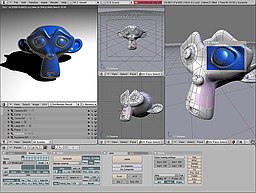
3D computer graphics in contrast to 2D computer graphics are graphics that use a three-dimensional representation of geometric data that is stored in the computer for the purposes of performing calculations and rendering 2D images. Such images may be for later display or for real-time viewing.
Despite these differences, 3D computer graphics rely on many of the same algorithms as 2D computer vector graphics in the wire frame model and 2D computer raster graphics in the final rendered display. In computer graphics software, the distinction between 2D and 3D is occasionally blurred; 2D applications may use 3D techniques to achieve effects such as lighting, and primarily 3D may use 2D rendering techniques.

Computer animation

Pixel
In digital imaging, a pixel (or picture element[5]) is a single point in a raster image. Pixels are normally arranged in a regular 2-dimensional grid, and are often represented using dots or squares. Each pixel is a sample of an original image, where more samples typically provide a more accurate representation of the original. The intensity of each pixel is variable; in color systems, each pixel has typically three components such as red, green, and blue.
[edit]Graphics
Graphics are visual presentations on some surface, such as a wall, canvas, computer screen, paper, or stone to brand, inform, illustrate, or entertain. Examples are photographs, drawings, line art, graphs, diagrams, typography, numbers, symbols, geometric designs, maps, engineering drawings, or other
Rendering
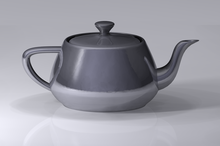
A 2D/3D scene file contains objects in a strictly defined language or data structure. It would contain geometry, viewpoint, texture, lighting, and shading information as a description of the virtual scene. The data contained in the scene file is then passed to a rendering program to be processed and output to a digital image or raster graphics image file. The rendering program is usually built into the computer graphics software, though others are available as plug-ins or entirely separate programs; examples include mental images' mental ray and Disney Pixar's RenderMan. The term "rendering" may be by analogy with an "artist's rendering" of a scene. Though the technical details of rendering methods vary, the general challenges to overcome in producing a 2D image from a 3D representation stored in a scene file are outlined collectively as the graphics pipeline along a rendering device, such as a GPU. A GPU is a purpose-built device able to assist a CPU in performing complex rendering calculations. If a scene is to look relatively realistic and predictable under virtual lighting, the rendering software should solve the rendering equation. The rendering equation doesn't account for all lighting phenomena, but is a general lighting model for computer-generated imagery. 'Rendering' is also used to describe the process of calculating effects in a video editing file to produce final video output.images. Graphics often combine text, illustration, and color. Graphic design may consist of the deliberate selection, creation, or arrangement of typography alone, as in a brochure, flier, poster, web site, or book without any other element. Clarity or effective communication may be the objective.

- Shading

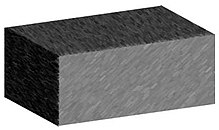
- Shading refers to depicting depth in 3D models or illustrations by varying levels of darkness. It is a process used in drawing for depicting levels of darkness on paper by applying media more densely or with a darker shade for darker areas, and less densely or with a lighter shade for lighter areas. There are various techniques of shading including cross hatching where perpendicular lines of varying closeness are drawn in a grid pattern to shade an area. The closer the lines are together, the darker the area appears. Likewise, the farther apart the lines are, the lighter the area appears. The term has been recently generalized to mean thatshaders are applied.
- Texture mapping
- Texture mapping is a method for adding detail, surface texture, or colour to a computer-generated graphic or 3D model. Its application to 3D graphics was pioneered by Dr Edwin Catmull in 1974. A texture map is applied (mapped) to the surface of a shape, or polygon. This process is akin to applying patterned paper to a plain white box. Multitexturing is the use of more than one texture at a time on a polygon.[6] Procedural textures (created from adjusting parameters of an underlying algorithm that produces an output texture), andbitmap textures (created in an image editing application) are, generally speaking, common methods of implementing texture definition from a 3D animation program, while intended placement of textures onto a model's surface often requires a technique known as UV mapping.
- Anti-aliasing
- Rendering resolution-independent entities (such as 3D models) for viewing on a raster (pixel-based) device such as a LCD display or CRT television inevitably causes aliasing artifacts mostly along geometric edges and the boundaries of texture details; these artifacts are informally called "jaggies". Anti-aliasing methods rectify such problems, resulting in imagery more pleasing to the viewer, but can be somewhat computationally expensive. Various anti-aliasing algorithms (such as supersampling) are able to be employed, then customized for the most efficient rendering performance versus quality of the resultant imagery; a graphics artist should consider this trade-off if anti-aliasing methods are to be used. A pre-anti-aliased bitmap texture being displayed on a screen (or screen location) at a resolution different than the resolution of the texture itself (such as a textured model in the distance from the virtual camera) will exhibit aliasing artifacts, while any procedurally-defined texture will always show aliasing artifacts as they are resolution-independant; techniques such as mipmapping and texture filtering help to solve texture-related aliasing problems.
- Computational physics
- Computer-aided design
- Computer simulation
- Digital art
- Education
- Graphic design
- Infographics
- Information visualization
- Rational drug design
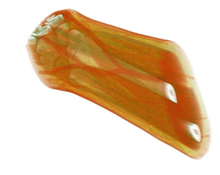
- Scientific visualization
- Video Games
- Virtual reality
- Web design

No comments:
Post a Comment